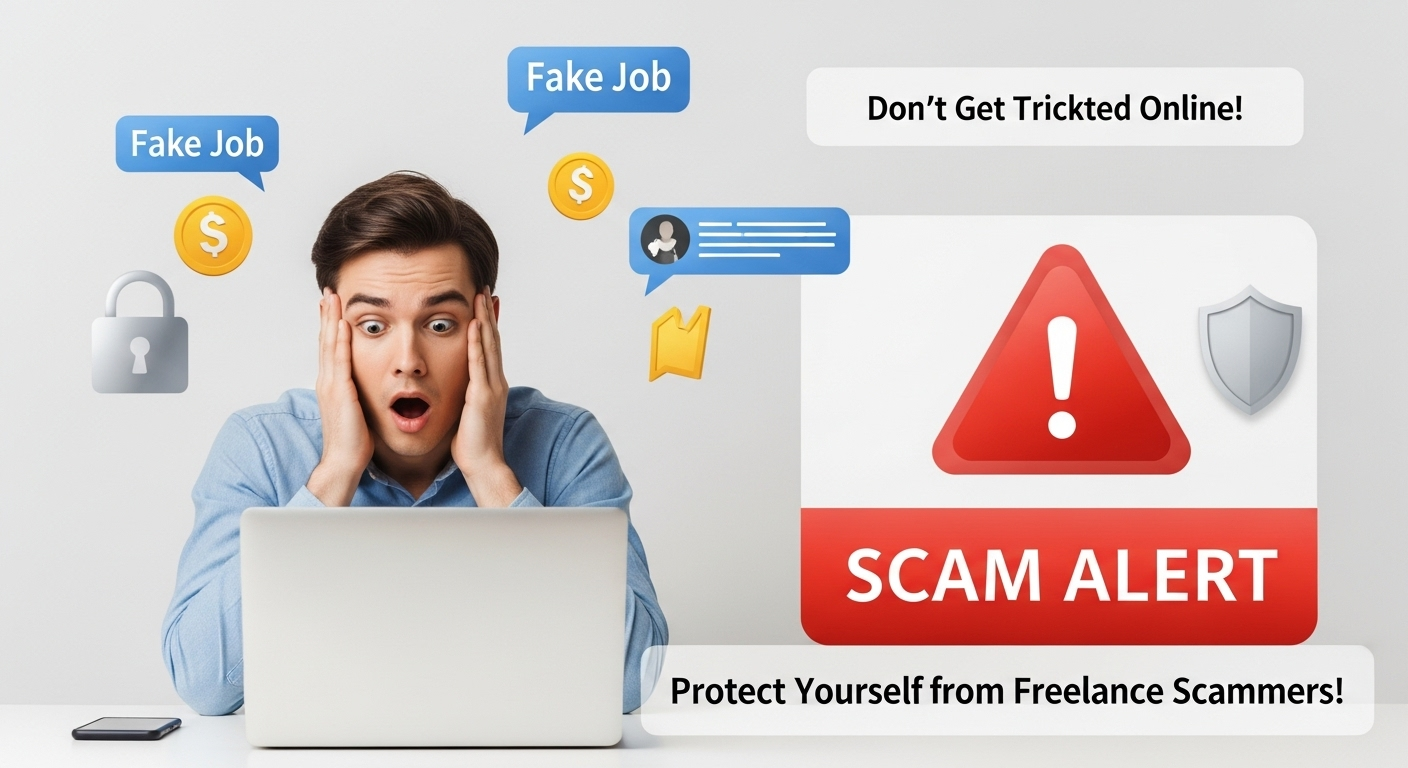
Have you ever received a freelance job offer that seemed too good to be true? Maybe someone promised big money for simple work — only to disappear after you submitted your task. Unfortunately, this is a common story among new freelancers. Scams are everywhere online, and if you’re not careful, they can cost you time, money, and even your reputation.
Freelancing can be a life-changing career path — giving you the freedom to work from anywhere and be your own boss. But the same flexibility also attracts scammers who take advantage of beginners who don’t yet know how to spot red flags. So, how can you stay safe and build a successful freelance career without getting scammed? Let’s break it down.
🚨 Common Types of Freelance Scams
Before learning how to avoid scams, it’s important to recognize what they look like. Here are the most common traps that freelancers fall into:
1. Fake Clients Offering “Too Good to Be True” Jobs
Scammers often promise large payments for easy tasks, like “$500 for a few social media posts.” Once you submit the work, they vanish — or worse, trick you into sharing personal information.
2. Upfront Payment Requests or Fake Checks
If a client asks you to pay something before starting work — for “software,” “training,” or “security verification” — it’s a scam. Legitimate clients never ask freelancers for money.
3. Moving Off the Platform
If someone on Fiverr, Upwork, or Freelancer asks you to “chat on WhatsApp or Telegram,” be cautious. Scammers do this to avoid platform monitoring and scam you privately.
4. Stolen Accounts and Fake Profiles
Some scammers pose as verified clients using fake job posts or stolen profiles. Always check their history, reviews, and verification status.
🧠 How to Detect a Scammer in Freelancing
Spotting a scammer early can save you from major trouble. Watch for these red flags:
- Poor grammar or vague job descriptions
- Offers that pay way above average rates
- Clients rushing you to start without proper discussion
- Asking for personal info (like ID or bank details)
- Unverified payment methods or strange email domains
Read About: Which Freelance Skill Pays the Most in Pakistan?
When in doubt — research the client or report suspicious activity to the platform.
🛑 How to Avoid Freelance Scams
1. Stick to Reputed Platforms
Always work through trusted freelance websites like Upwork, Fiverr, Freelancer, or Toptal. These platforms hold client payments in escrow, ensuring you get paid once the job is done.
2. Never Share Personal Information
Avoid giving out your phone number, address, or bank details unless absolutely necessary. Use the platform’s built-in communication tools instead.
3. Use Escrow or Milestone Payments
On most platforms, clients can deposit funds before you start. This system protects both sides. Don’t begin work unless the payment is secured.
4. Research Every Client
Search their name, company, and email online. A quick Google search can reveal a lot about a client’s legitimacy.
5. Set Clear Contracts and Boundaries
Always have a written agreement. Define your payment terms, deadlines, and scope of work. Contracts are your first defense against disputes.
💬 Real Example: How Freelancers Get Tricked
A freelancer named Sara once accepted a logo design project that paid $800 — upfront, the client sent a fake check and asked her to “refund” a part of it because they “overpaid.” When she did, the bank later flagged the check as fraudulent. Sara lost $500 instantly.
Moral of the story: never refund or pay anything unless money is fully cleared and verified.
🔒 How to Protect Yourself Long-Term
If you want to stay safe while growing your freelance career:
- Use two-factor authentication on all accounts
- Backup your files and conversations
- Build a portfolio on trusted sites (LinkedIn, Behance, Fiverr)
- Educate yourself on common scams every few months
Remember, knowledge is your strongest defense.
🌟 Final Thoughts
Freelancing offers incredible freedom — but that freedom comes with responsibility. Scammers are everywhere, but with the right awareness and tools, you can stay several steps ahead. Always verify clients, use secure payment systems, and trust your instincts.